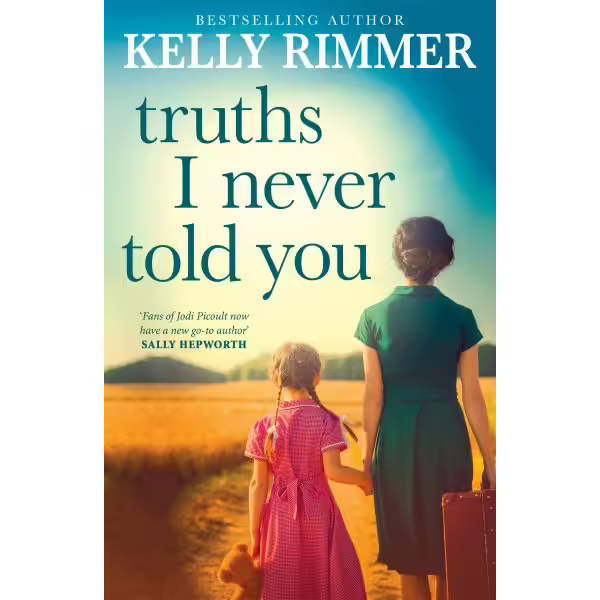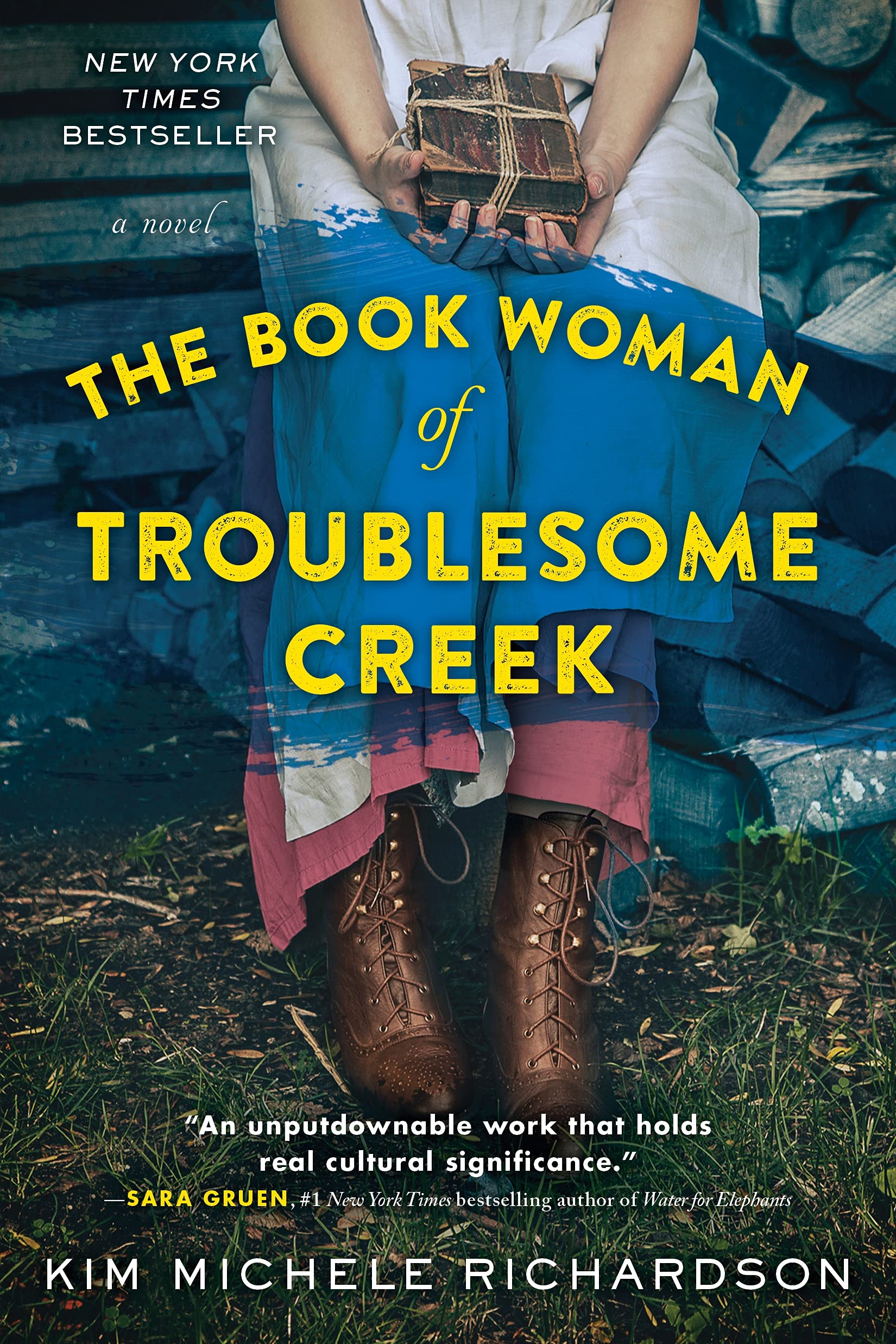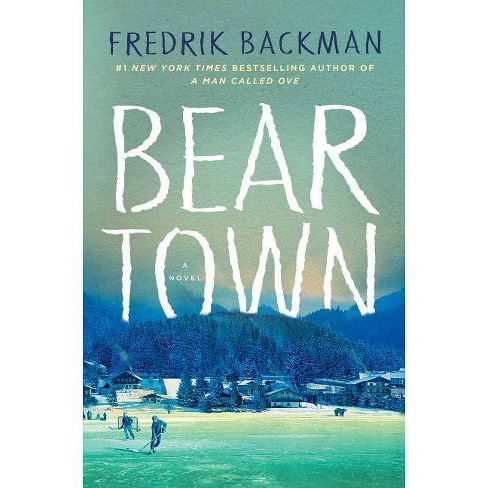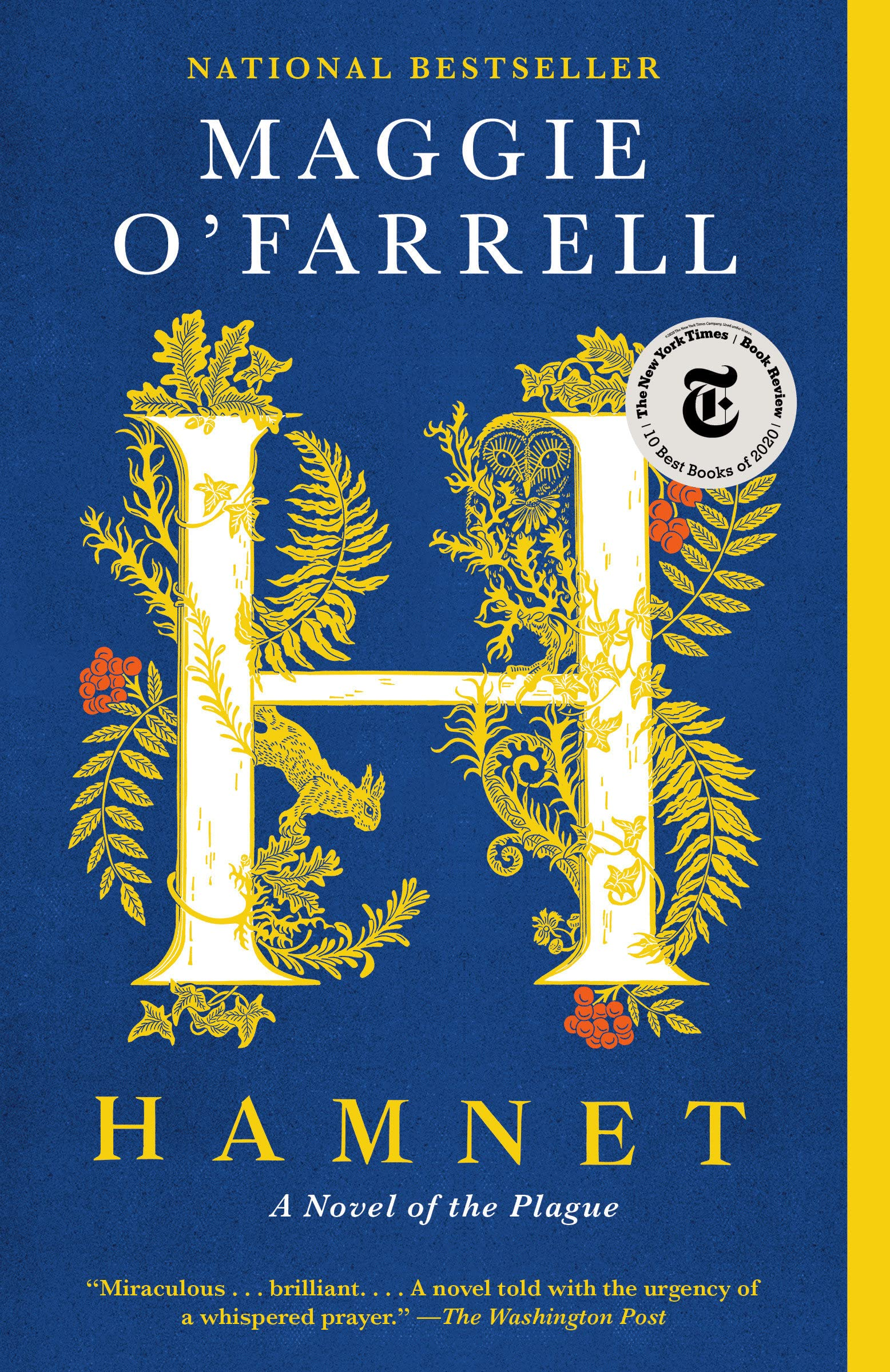
When Astrid witnesses the sudden death of her long-time acquaintance, it shakes her to her core. She has a sudden realization about her own life, how fragile that might be. Astrid has never been a nurturer, never exuded much warmth or patience, but she’s working on that now. And as she struggles to make up for the past, she begins to really learn who her children and grandchildren have become, almost in spite of her.
While this is not high literature, nor a deeply moving novel, it does serve up an amusing, light summer read while sitting under your umbrella at the beach. The characters are vague but interesting enough – and the plot is not exactly complex, but it holds your attention until the last page.
It does speak to both the highlights and the pressures/challenges of living in a small town. While it might be easier to have the familiarity of being surrounded by those one has grown up alongside, there are also the expectations, the assumptions that come along with that. Astrid’s children have each been coping with these pressures in their own ways, sometimes effectively and often dysfunctionally. One of her children fled the town because of this pressure. It seems that Astrid had never taken this into account until some of the crises in the story emerged.
This is definitely NOT a MUST READ, but it’s an appropriate book to pack along with your bathing suit and towel…
Cussie Mary is never more satisfied than when she is able to carry a new bit of reading material to a beloved patron, whether it be a young, aspiring forester or an elderly, near-blind seamstress. She loves her mission as “Book Woman”, working as a Pack Horse Librarian here in Kentucky, and does not wish for any other role in what others might perceive as a lonely life. Pa, though, has a different idea. He seems hell-bent on finding her a husband, and continues to light the courting candle, much to her dismay. What ensues opens up her very narrow world to unimaginable possibilities, both dangerous and hopeful.
I adore how literature can shine a spotlight onto pivotal moments and impactful individuals in our history, instructing us without ever having us enter a classroom. In this dramatic read, we learn about the US initiative to encourage literacy in the remotest parts of Kentucky, bringing books to those who would otherwise never have had access. These brave women (and some men) of the Pack Horse Librarians walked or rode out on their own mules or horses for miles each day, delivering donated books, magazines, and newspapers to folks living in the rough, mountainous terrain of Appalachia. Children and adults who barely had enough to eat gained sustenance on what they learned from this program, and these women touched the everyday lives of their patrons in so many ways.
We also learn here of the Blue families of Kentucky as well. These families have a rare blood disorder called methemoglobinemia, which gives the skin a blue appearance. Cussie Mary is so afflicted and this sets her apart. She is shunned by white and black folks alike, many afraid to even touch her for fear of catching it (it’s not contagious), thinking it something from “the devil” or worse. She is treated with scorn and derision by so many. Only those able to see through color see her for the kind, caring person she is. How universal is this concept, eh?
There are many tender moments here, woven through the story, but I believe what is missing here is humor. While many books deal with significant issues and enlighten us about historical moments of note, there are, intertwined in them, moments of levity to alleviate the tension. I felt there were not enough of those here. There is an almost relentless tone of tension here that is somewhat wearing. A perfect novel has a bit more balance, in my opinion.
This is still an important story to share and I believe a worthwhile read. Just prepare to be anxious – you can’t avoid it here!
If you don’t play hockey, or follow hockey, or at least tolerate hockey, you will not last long in Beartown. The entire population, intimate as it is, is consumed with it. Kids begin skating once they can walk, and everyone is on the lookout for those charmed few, those who have that natural gift, that drive, that will send them through to the A-team. Kevin certainly has it, and with Benji at his side, fighting off any opponent who might threaten his path, he is a sure shot. That is, until a crime is committed, which might just change everything.
Fredrik Backman is another writer who, by virtue of the beauty of his writing, has me convinced that there is no way I should ever even think of trying to write. He has the uncanny ability to weave complicated, layered, and realistic plot lines around complex and gorgeous characters. And unlike with some novels with so many characters, we come to know each one so well that we never confuse any of them, never wonder who is whom, because we have fallen in love with most of them. The warmth with which he imbues them grants them their familiarity. They become our dear friends.
Also, there is a beautiful message here about the challenge of loyalty; whether that be loyalty to one’s family, to one’s friends, to one’s team., or to one’s own values. Most of the characters find themselves wrestling here with conflicting loyalties. and some impress us and some disappoint us. But all of them are so stunningly human in their struggling. My favorite is Ramona, who is a bartender. She’s depicted as someone who’s seen it all, and who has been loyal to those who have lost the loyalties of most everyone else. She sees people for who they are, not who they profess to be. I would love to be more like Ramona.
This book has it all – characters, plot, warmth, important message – all the makings of a MUST READ!
Now that Malik has grown and has been educated in a more formal way, Lakshmi feels a responsibility to continue his training by sending him back to Jaipur to be exposed to the practical aspects of the construction business, which will inevitably continue to open doors for him professionally. While he is not her son by birth, Lakshmi has taken him under her wing since he was 8 years old, cared for him almost like a son, and feels a responsibility toward him – no, really an affection toward him, as if he were her own. And while he is hesitant, because of his newly blossoming relationship with Nimmi, a local Himalayan widow with 2 young children, he is also respectful and appreciative of his opportunity to learn more and grow from the relationships he has in Jaipur. Little does he know that a disaster awaits of epic proportion that will change the course of his life and potentially endanger both his future and the future of his beloved Nimmi.
For readers of The Henna Artist, this is a must-read. It is the next in this beautiful series and informs us of what happens to the resourceful, loyal and beloved character, Malik after he has grown and matured. While he has become a bit more cosmopolitan from his prep school education, he retains his down-to-earth integrity and grit, and he and Lakshmi continue to be the force to be reckoned with as a team, almost despite themselves.
And even while we may see where the story is headed in general, there are enough suspenseful twists and turns to keep our noses in this book and keep the pages turning. And the warmth and love that spills onto the pages keeps us needing to know that our characters will all be ok in the end. We also have the added plus that we get to learn about Indian culture, as well as about the culture of some of the Himalayan nomadic tribes as well.
This is a delightful novel that will bring you joy and warmth as you read – and what is better than that???
Joan is an ICU attending at West Side Hospital in New York City. She is never happier than when she is reveling in the fast pace and the intensity of the Medical ICU, almost worshiping the machines that aid her in maintaining the lives of her patients. So why does everyone around her concern themselves with what else she might be doing? Why do her brother and his wife constantly ask her when she’s going to move to Greenwich and get married? Why does her neighbor, Mark, feel compelled to force-feed her a diet of current and past pop culture, as if there’s some form of test at the end? As Joan comes to terms with various changes around her, in her family, and in the world, she also learns to become more rooted and comfortable with who she happens to be.
This is, quite subtly, a coming of age story, although the heroine is already of age. While she is a fully accomplished adult, having achieved a brilliant career, those around her still are not satisfied and feel they need to impose upon her their own values of what a “full” life entails. Interestingly, I found myself, as the reader, getting sucked into the allure of what these others were suggesting for her. It initially feels innocent enough, particularly from her neighbor, Mark. It feels, at first, like generosity. But we see that what masquerades as kind very gradually reveals itself to be presumptuous and patronizing. Sometimes what others need and want, in fact, is to be left alone.
The writing here is superb. The story rumbles along in a way that is nakedly honest, much like the thought patterns of Joan herself. Her observations are often awkward and flat – and yet clearly betray her struggle over her identity and her relationships, both familial and social.
This is an engaging read, with a lot to say about how we interact with others who might see the world differently from how we might.
On their route back to their hotel after a Sunday service at the African Free Church in Charleston, SC in the year 1859, Mother, Mary and Georgy Woolsey come upon a wagon transporting children – babies – to be sold at auction that afternoon. Horrified, they stay to observe what they’d never seen in their home town of New York City, and although they could not mitigate the cruelty of that moment, Mother slips her business card to their mother, hoping to give her a place of future refuge, a focus for hope. Georgy takes this a step further, by signing up to train and work as a nurse, bravely and passionately caring for soldiers who fight for the freedom of these enslaved individuals. Georgy’s story ultimately intertwines with the stories of both Jemma, an enslaved young woman on the Peeler Plantation in Maryland, and Anne-May, the young plantation owner. As their stories unfold, so do those of the battles of the Civil War, the atrocities of slavery, the profiteering of spies, and the ultimate path to justice and freedom.
This is an intricately woven, thoroughly researched, historical fiction novel based on the actual, courageous lives of the Woolsey women of Connecticut and New York City. Georgy’s character is real, and while some of her exploits are fiction, much of what is written is based upon her actual life experience. She is a strong-willed and fiercely independent character, and is not caught up in the superficial exploits of her wealthy cohorts. While many look down at her for pursuing a nursing career, and while the male nurses and many doctors around her treat her and her female colleagues with brutal disgust, she plods along and doles out the outstanding, compassionate care she is trained to deliver.
On the other hand, Jemma and Anne-May are not real people, but rather, created as representative characters that are typical of their era. Jemma, a young and strong-willed woman, born into enslavement and treated harshly most of her life, carries trauma both physical and psychological with stolid forbearance. She keeps fighting for what she believes in, but she is also realistic and understands more than most man’s capacity for evil. And Anne-May happens to be one of the ones to show her how deeply this capacity runs.
One of the most moving parts, for me, was a scene in which Jemma finds herself in the warm embrace of the Woolsey sisters. Finally finding a moment of respite from her terrifying world, she is given a chance to experience freedom in a way she’s never felt before. Sadly, she finds herself under a new kind of oppression. While there is good intention and care, she is still being told what to read, what to think and what to do. In a dramatic moment, she blurts out in anger, asking to be left alone to decide these things for herself. As often happens, one of the sisters takes offense, because of her well-intentioned motives, not realizing that her actions and their repercussions are independent of her intention. Only Georgy is able to take in what she is saying and their bond tightens because of it. This is a powerful moment that resonates still today.
In this gorgeous novel you will find breathless suspense, moments of deep sorrow, and dramatic scenes of triumph, and each of the characters will bring you on a journey you will love being on with them. Martha Hall Kelly has absolutely done it again, with this third in the series about this awe-inspiring family and has created another MUST READ for us all. These are truly gifts she has bestowed on us – and I for one am grateful.
Although she’s been told she’s worth nothing her whole life, Elsa still dreams of a world in which she might accomplish something worthwhile. Being 25 and unmarried in the early 1930’s is a pretty clear indication that chances are slim that you will be leaving your family home at all. No, you’ll likely be under the thumb of your overbearing, critical mother and father your whole life. Unless you take action. Unless you do something drastic – like maybe buy that bolt of bold, red silk and sew yourself that beautiful, lavish dress and just sneak out for that night on the town and pretend you’re like everyone else– to hell with what they say. Be brave, her doting grandfather used to say to her. Well, she just might. Little does Elsa know that being brave will have to carry her through all of what comes thereafter, as she takes each next step, wanted or not.
In The Four Winds, Kristin Hannah has written what will inevitably come to be known as a great American novel, a sort of Grapes of Wrath narrated through the voice of a woman. We are lured inside the head and the heart of our heroine, Elsa, a modest, resourceful, and hard-working woman, bitterly rejected by her own family. She easily earns our sympathy, as she gradually gains her own strength, visualizing her own purpose. We feel love when she is finally loved and we shed tears when she is hurt, and we applaud her as she overcomes one arduous obstacle after another.
This is also a story of a dark era in our history. The Dust Bowl crisis during the Great Depression was a tragic consequence of the prolonged drought that occurred during the 1930’s, and layered onto the economic crisis of the Depression, it could not have come at a worse time. Scorched farmlands bankrupted thousands, and, lured by advertisements for jobs, too many fled west and found only steeper poverty and absent resources. The narrative starkly highlights the failure of our country to adequately provide for those who were left with nothing. This left those who were more fortunate, empowered by their vigilante groups, to demonstrate only anger and hatred toward these folks who were starving for work, starving to have the opportunity to help themselves.
I love that the women here are strong characters. Elsa grows into a strong character as she comes to know herself. Her daughter, Loreda, is born strong – rebellious, with a righteous anger that is sometimes misdirected but always idealistic. And there is Elsa’s mother-in-law, Rose, with her quieter strength – a woman who is fiercely loyal, uncomplaining, and who has the softest heart and is present when it matters. These are beautiful characters who will likely stay with you long after you finish turning the pages of this novel.
This story will singe a hole in your heart, but it will also fill it with admiration for the souls who fought for others, to raise up the unfortunate. It also reminds us how frequently history does repeat itself and how important it is to learn from the past.
Tiny has always been the perfect everything – the perfect daughter, the perfect sister, and now she’s expected to be the perfect wife as well. And Frank requires the perfect wife – doesn’t he? – if he is to be elected to congress, as he should be. But what about Tiny? What about what she really wants? Does it matter? Should she make it matter?
Beatriz Williams never fails to deliver the most lovable characters, impeccable writing packed with humor and expectation, and a twist that assures that she is always one step ahead of you. You will find yourself giggling at her sarcastic phrasing – so often brilliant – even in those thrilling moments when you cannot stop turning the pages. And you will relish in that delicious tension of not being able to read quickly enough to get to know what happens and not being able to read slowly enough to make the joy of it last longer.
And please don’t mistake this for fluff. There are subtle but important issues here. Williams intentionally elevates strong female protagonists, and Tiny is yet another. She struggles here for independence, and in the mid-1960’s, this is no easy mission. It wasn’t done, not in the family she married into, not in the social sphere in which she circulated. Women were only just beginning to break out of the 1950’s housewife-who-always-had-dinner-on-the-table-and-a-martini-waiting-for-her-husband-at-the-end-of-his-workday stereotype. Even as Tiny frets over how she cares too much what others think of her, she realizes that she must depart from what is expected of her in order to preserve her true self.
This may not be a “MUST READ” but you really must read this – it is pure delight!
It’s been 2 years since Lexie has heard from her sister, Annie, but she knows that her call can only harbor some tumultuous disaster. Chaos has always followed Annie, ever since their messy youth, and Lexie has always been there to be the adult in the room and to pick up the pieces for her. But this call… this blow may be more than even Lexie may be able to patch back together for her. This may be the one time that Annie may have to rise to the occasion and solve it for herself.
From the first page, we are locked in. Rimmer’s writing is fluid and compassionate although we can sometimes guess where the plot will take us, we are still so fond of these endearing characters that we feel compelled to keep turning the pages and follow them through their painful and hard-earned wins and losses. As the narrative bounces back and forth between Lexie’s current day experience and Annie’s journal entries, we are given a window into both what is happening now and what their explosive past has been like for each of them. And we cannot help but become emotional as this tender and tragic and beautiful story unfolds.
There is so much to unpack here, but I will try not to give too much away as I try to do so. One major theme is the injustice of our patriarchal laws around maternal-child welfare. Our laws that protect the unborn are geared to protect children, yes, but they completely ignore the woman who is hosting the growth of that unborn not-yet-person – and this is obvious throughout this story. This problem with our judicial system is magnified if that woman/host is afflicted with any kind of addiction. She is blamed for having a disease that is out of her control. We do not take away babies from mothers who do not care for their out-of-control gestational diabetes- nor should we! – but we imprison mothers who use illicit substances while pregnant. These mothers all have medical issues that need to be addressed, but because one is considered “bad” and one is considered “medical” we place a moral judgement upon one vs the other. As is pointed out in the novel, we should be spending the money that we use to imprison these women on evidence-based treatment for these mothers, parenting support when the babies are born and on early childhood interventions, if we REALLY want to benefit these children. Children generally do best when they are with their families. This is highlighted here so very starkly and appropriately.
Families are complicated and messy and Rimmer gets this so right. You cannot help but have your heart melt from this one.
Alina, the youngest of her siblings, is perfectly aware that she is spoiled, but she relishes the doting she receives from both her family and. her beloved crush, Tomasz. As her world begins to collapse around her, and the Germans invade her poor, industrial Polish town, she learns that she must grow up fast and that being careless of what is happening around her could cost her or someone close to her their life.
Fast forward to present day, we also meet Alice, struggling to keep up the balance of the life she never quite expected. The mother of a son with autistic spectrum disorder, Alice finds herself constantly advocating for him, sometimes even with her own husband. When her grandmother, Babcia, becomes acutely ill and asks of her the one thing she’s ever asked of her, it may push her fully over the edge – or possibly bring her back from it.
This heart-wrenching story, a work of fiction but laced with details from the author’s Polish, Catholic background, is a beautiful tribute to the utter bravery of Righteous Gentiles who resisted and rebelled against Nazi hatred and violence during WWII in order to save their fellow Polish, Jewish citizens. The Poles living through the Nazi occupation suffered also and some escaped to other countries. And the immigrant experience during war carries with it trauma, no matter where one comes from and no matter when it has occurred.
The writing is truly beautiful. We feel the characters deeply and their emotions become our own. We experience the pent-up rage that Alice feels as a mother and wife, and while reading, I had to remind myself to breathe, almost as if for her. We feel Alina’s profound terror, worrying constantly about the safety of her true love, Tomasz, and that of her entire family. And we almost can’t read quickly enough as the suspense mounts and we learn of the plot twist that is truly unexpected. It is a clever and warmly woven yarn – just be sure to have the tissues on hand!
This is a hard read, but well worth the journey! I believe this is a MUST READ!