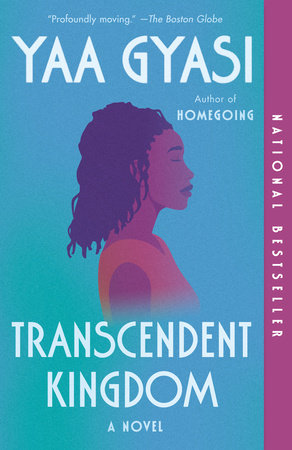
This epic tale begins with the birth of Effia, born during a fire that devastated her father’s crops, a harbinger of the impact that fire would have on generations to come. And as we learn about the generations that follow, we also learn about the history of the warring tribes that inhabit the Gold Coast of Africa as well as the movement of enslaved Black men and women to America and their experience through generations there.
This is another work of genius by Gyasi. Through many endearing characters and colorful and impassioned scenes, we learn about the history of the peoples of current day Ghana as well as how so many came to be enslaved in America. We learn, too, about their experience of continued oppression beyond the years of slavery in the US as well. The stories are so tactile and sharply painted, the reader cannot help but feel a connection to the many characters, as if we are traveling along the family’s lineage ourselves, through each generation.
And Gyasi omits nothing. She includes the dark reality for those who migrated north seeking relief from enslavement only to find continued prejudice and rejection in different forms. She includes the ugly truth about our history of replacing slavery with mass incarceration. She writes about our American reality now and how, in spite of some change and advancement, divides persist.
It’s a beautifully rendered portrait of the not-so-beautiful history of Ghana and the history of our country. Yes, another MUST-READ.
Born in Hyesan, North Korea, Hyeonseo Lee was raised, as all of her peers were, to believe that her country was the “Greatest Nation on Earth.” Indoctrinated from the time she was born to worship the leaders of her country above all else, she witnessed at the age of 7 what happened when one opposed the regime: public execution. But even while she felt the pressure to blend in and follow the party line, she noted that there were, in truth, stark differences in how people lived. While the communists sang about equality among the people, how their government provided for its people, Hyeonseo observed that a family’s social status determined just how much that government actually provided. In reality, it was far from an equal distribution. And while she was privileged to some degree, this privilege did not protect her family from political danger. In this memoir, she shares her utterly harrowing story of her years-long journey toward freedom.
If you’ve followed this blog, you will note that I have been reading quite a bit about various refugee experiences. All of them are impossibly harrowing, but none has read more like a suspense novel than this one. At every turn, this young woman and her family encountered unimaginable peril, always being on the verge of disaster and often experiencing heart-wrenching disappointment and suffering. They were constantly at the mercy of others, usually being preyed upon by corrupt officers and traffickers alike, rarely reaping the courageous generosity of others, even strangers. Most profoundly, once they finally did achieve freedom, they actually had to be taught that humans deserved fundamental human rights in order to understand how deeply their own had been violated.
The bravery and dedication to family demonstrated by this heroine is infinite. She is an inspiration to all of us, particularly in this moment when we are seeing so many fleeing their homes in search of safety. It reminds us that no one chooses to leave their home. One leaves only when there is no other choice.
I’d like to depart from my usual post and add a poem which I found deeply moving (shared with me by an inspirational leader for whom I am so grateful):
Home by Warsan Shire
no one leaves home unless home is the mouth of a shark you only run for the border when you see the whole city running as well
your neighbors running faster than you breath bloody in their throats the boy you went to school with who kissed you dizzy behind the old tin factory is holding a gun bigger than his body you only leave home when home won’t let you stay.
no one leaves home unless home chases you fire under feet hot blood in your belly it’s not something you ever thought of doing until the blade burnt threats into your neck and even then you carried the anthem under your breath only tearing up your passport in an airport toilet sobbing as each mouthful of paper made it clear that you wouldn’t be going back.
you have to understand, that no one puts their children in a boat unless the water is safer than the land no one burns their palms under trains beneath carriages no one spends days and nights in the stomach of a truck feeding on newspaper unless the miles travelled means something more than journey. no one crawls under fences no one wants to be beaten pitied
no one chooses refugee camps or strip searches where your body is left aching or prison, because prison is safer than a city of fire and one prison guard in the night is better than a truckload of men who look like your father no one could take it no one could stomach it no one skin would be tough enough
the go home blacks refugees dirty immigrants asylum seekers sucking our country dry niggers with their hands out they smell strange savage messed up their country and now they want to mess ours up how do the words the dirty looks roll off your backs maybe because the blow is softer than a limb torn off
or the words are more tender than fourteen men between your legs or the insults are easier to swallow than rubble than bone than your child’s body in pieces. i want to go home, but home is the mouth of a shark home is the barrel of the gun and no one would leave home unless home chased you to the shore unless home told you to quicken your legs leave your clothes behind crawl through the desert wade through the oceans drown save be hunger beg forget pride your survival is more important
no one leaves home until home is a sweaty voice in your ear saying — leave, run away from me now i dont know what i’ve become but i know that anywhere is safer than here
Although she’s been told she’s worth nothing her whole life, Elsa still dreams of a world in which she might accomplish something worthwhile. Being 25 and unmarried in the early 1930’s is a pretty clear indication that chances are slim that you will be leaving your family home at all. No, you’ll likely be under the thumb of your overbearing, critical mother and father your whole life. Unless you take action. Unless you do something drastic – like maybe buy that bolt of bold, red silk and sew yourself that beautiful, lavish dress and just sneak out for that night on the town and pretend you’re like everyone else– to hell with what they say. Be brave, her doting grandfather used to say to her. Well, she just might. Little does Elsa know that being brave will have to carry her through all of what comes thereafter, as she takes each next step, wanted or not.
In The Four Winds, Kristin Hannah has written what will inevitably come to be known as a great American novel, a sort of Grapes of Wrath narrated through the voice of a woman. We are lured inside the head and the heart of our heroine, Elsa, a modest, resourceful, and hard-working woman, bitterly rejected by her own family. She easily earns our sympathy, as she gradually gains her own strength, visualizing her own purpose. We feel love when she is finally loved and we shed tears when she is hurt, and we applaud her as she overcomes one arduous obstacle after another.
This is also a story of a dark era in our history. The Dust Bowl crisis during the Great Depression was a tragic consequence of the prolonged drought that occurred during the 1930’s, and layered onto the economic crisis of the Depression, it could not have come at a worse time. Scorched farmlands bankrupted thousands, and, lured by advertisements for jobs, too many fled west and found only steeper poverty and absent resources. The narrative starkly highlights the failure of our country to adequately provide for those who were left with nothing. This left those who were more fortunate, empowered by their vigilante groups, to demonstrate only anger and hatred toward these folks who were starving for work, starving to have the opportunity to help themselves.
I love that the women here are strong characters. Elsa grows into a strong character as she comes to know herself. Her daughter, Loreda, is born strong – rebellious, with a righteous anger that is sometimes misdirected but always idealistic. And there is Elsa’s mother-in-law, Rose, with her quieter strength – a woman who is fiercely loyal, uncomplaining, and who has the softest heart and is present when it matters. These are beautiful characters who will likely stay with you long after you finish turning the pages of this novel.
This story will singe a hole in your heart, but it will also fill it with admiration for the souls who fought for others, to raise up the unfortunate. It also reminds us how frequently history does repeat itself and how important it is to learn from the past.
In this tender memoir, Trevor Noah shares his experience growing up during the final edge of apartheid in South Africa. Through vividly narrated vignettes, we learn about his complicated relationship with his mother, who is fiercely devoted to him and yet is independent, stubborn and vulnerable. We learn of his early struggles to find himself, and how he must battle against the vicious cycle of poverty that apartheid has inflicted upon his people.
It was suggested to me to listen to the audio version of this book – and this was excellent advice. Hearing Trevor Noah narrate his own story, in his own beautiful, South African accent and fluidly modulating to his family and friends’ voices and accents, is just a gift to yourself.
Noah is a brilliant storyteller. He shares his experiences with such warmth and humor, as if he is sitting with you in your living room, over a cup of your favorite hot tea – but as if he’s sharing his deepest, darkest memories, only with you. He describes in colorful detail some of the most outrageous adventures and unbelievable experiences. But even as he shares his joy and his pain, it is as if he is flickering a smile at you, as if to say, we can still laugh, even as we hurt. This is how we cope.
You will be engrossed and amazed — you will gasp and you will laugh out loud. Don’t just read this one – listen to it!
It’s a “MUST READ” but more than that, it’s a “MUST LISTEN!”
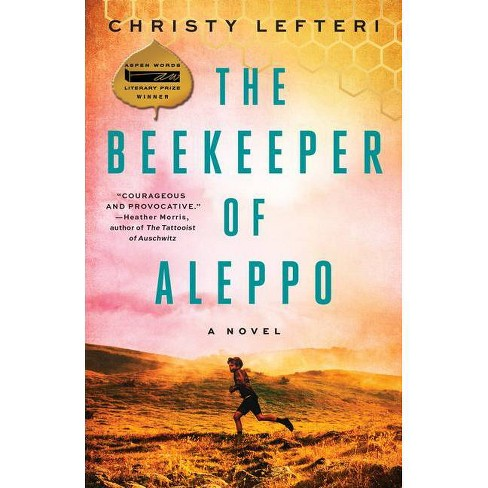
Nuri and his wife, Afra, have survived the arduous trek from Aleppo to the UK, and while they are awaiting their asylum application interview, they are staying in a B & B with immigrants with similarly devastating pasts. This waiting is not easy. Nuri is plagued by flashbacks of their escape from Syria, the trauma and losses they’ve experienced during the war there, and the anxiety about what lies ahead. But because he is seeing this trauma through his own eyes, he is finding it hard to connect with Afra, who is seeing it through her own. The question is whether or not they will find their way back to the family they know they once were.
This is not my first exposure to the refugee experience; though this may be one of the most poignant. I believe what contributes greatly to this is the sensorial nature of the author’s descriptions. We inhale Afra’s rose perfume as Nuri does,. We hear the buzzing of the hives tended to by Nuri and his cousin, Moustafa. And we can envision the stark colors of the drawings created by Afra, even when she cannot. And since we are right there in the sensory experience, we are also with them in their fear, their vulnerability, not knowing whom to trust, wondering where their next meal or shelter will come from or how they will get to the next step of their journey. We feel it in our bones.
In this depiction, we also see the worst of people and the best, as we do in most crises. We see the vultures who prey on the vulnerable, those who profit from those who are destitute and desperate and the corrupt underworld that feed off of this humanitarian nightmare. As Nuri gains the trust of others in his travels, he learns their stories and sees that his situation is not even the worst possible, and he feels deeply, especially for the plight of the many babies and young children refugees. On the other hand, he also encounters many who are kind, those who give food and clothing to the passing refugees, and those who do show compassion and support them in their journey.
I think this is an important read with an understated yet powerful impact that will linger with you long after you turn the last page.
It’s been 2 years since Lexie has heard from her sister, Annie, but she knows that her call can only harbor some tumultuous disaster. Chaos has always followed Annie, ever since their messy youth, and Lexie has always been there to be the adult in the room and to pick up the pieces for her. But this call… this blow may be more than even Lexie may be able to patch back together for her. This may be the one time that Annie may have to rise to the occasion and solve it for herself.
From the first page, we are locked in. Rimmer’s writing is fluid and compassionate although we can sometimes guess where the plot will take us, we are still so fond of these endearing characters that we feel compelled to keep turning the pages and follow them through their painful and hard-earned wins and losses. As the narrative bounces back and forth between Lexie’s current day experience and Annie’s journal entries, we are given a window into both what is happening now and what their explosive past has been like for each of them. And we cannot help but become emotional as this tender and tragic and beautiful story unfolds.
There is so much to unpack here, but I will try not to give too much away as I try to do so. One major theme is the injustice of our patriarchal laws around maternal-child welfare. Our laws that protect the unborn are geared to protect children, yes, but they completely ignore the woman who is hosting the growth of that unborn not-yet-person – and this is obvious throughout this story. This problem with our judicial system is magnified if that woman/host is afflicted with any kind of addiction. She is blamed for having a disease that is out of her control. We do not take away babies from mothers who do not care for their out-of-control gestational diabetes- nor should we! – but we imprison mothers who use illicit substances while pregnant. These mothers all have medical issues that need to be addressed, but because one is considered “bad” and one is considered “medical” we place a moral judgement upon one vs the other. As is pointed out in the novel, we should be spending the money that we use to imprison these women on evidence-based treatment for these mothers, parenting support when the babies are born and on early childhood interventions, if we REALLY want to benefit these children. Children generally do best when they are with their families. This is highlighted here so very starkly and appropriately.
Families are complicated and messy and Rimmer gets this so right. You cannot help but have your heart melt from this one.
Laura was no stranger to the streets of Manhattan in the mid-1980’s, but something made her stop and turn around after passing a small, skinny, Black boy asking for money on one fateful Monday afternoon. His name was Maurice, and he was half-starved, and when she invited him for lunch at McDonald’s, he accepted. Laura was careful not to pry too far, but could see that Maurice was fending largely for himself, and she was unsure if she’d ever even see him again or how that would happen. To her amazement, though, she did, every Monday from then on. From this bloomed an unlikely friendship that became a blessing for both Laura and Maurice.
This is a true story that is told from Laura’s perspective, but gives a great deal of background from Maurice’s family experience as well. Both of them have experienced a great deal of family trauma, although Maurice’s is quite dire, with most of his family falling victim to the devastating crack epidemic of the 1980’s. While Maurice is clearly loved by his family, particularly his mother and grandmother, they are both usually too ill to properly care for him and he is often left to his own, skillful, but youthful devices. When Laura meets him, he is living in a crowded single room with many drug-addicted relatives where there is no routine, no structure, and never any food in the fridge. Laura is the first person to ask him what he might consider being when he grows up, giving him a first glimpse of the possibility of a real future for himself, besides what he sees in his family.
On one hand, this story is inspiring. Laura speaks freely about how she has gained as much from the relationship as she has given. While she truly has given, whether in lunches made in brown paper bags – signifying to Maurice a show of love and care for him – or clothing, or just a periodic respite from his tumultuous family life, she has also received. She has not had relationships where she was able to have children, and I believe Maurice was sort of like a son to her. She was able to lavish attention, occasional gifts and intermittently share her wisdom with him, the way she might with a son, and she felt gratification in this. And certainly, Maurice was given something of a lifeline, in that he was shown a different possibility for how his life might be – that he did not have to follow the path of his family and that he could choose a steadier, healthier, and safer path for himself. And he did.
On the other hand, the story being written as it was also feels a bit self-congratulatory and almost cringe-worthy. We’re here again, with another white woman “saving'” a Black boy – and it just feels a bit uncomfortable to read about this. Laura is truly generous and giving – but why does she have to write about it? While “a portion” of the proceeds from the book are destined for the No Kid Hungry non-profit group, it still feels a bit strange.
I’d be very curious to hear what others feel about this book and this issue. I invite your comments! I am truly torn over this one!
Alina, the youngest of her siblings, is perfectly aware that she is spoiled, but she relishes the doting she receives from both her family and. her beloved crush, Tomasz. As her world begins to collapse around her, and the Germans invade her poor, industrial Polish town, she learns that she must grow up fast and that being careless of what is happening around her could cost her or someone close to her their life.
Fast forward to present day, we also meet Alice, struggling to keep up the balance of the life she never quite expected. The mother of a son with autistic spectrum disorder, Alice finds herself constantly advocating for him, sometimes even with her own husband. When her grandmother, Babcia, becomes acutely ill and asks of her the one thing she’s ever asked of her, it may push her fully over the edge – or possibly bring her back from it.
This heart-wrenching story, a work of fiction but laced with details from the author’s Polish, Catholic background, is a beautiful tribute to the utter bravery of Righteous Gentiles who resisted and rebelled against Nazi hatred and violence during WWII in order to save their fellow Polish, Jewish citizens. The Poles living through the Nazi occupation suffered also and some escaped to other countries. And the immigrant experience during war carries with it trauma, no matter where one comes from and no matter when it has occurred.
The writing is truly beautiful. We feel the characters deeply and their emotions become our own. We experience the pent-up rage that Alice feels as a mother and wife, and while reading, I had to remind myself to breathe, almost as if for her. We feel Alina’s profound terror, worrying constantly about the safety of her true love, Tomasz, and that of her entire family. And we almost can’t read quickly enough as the suspense mounts and we learn of the plot twist that is truly unexpected. It is a clever and warmly woven yarn – just be sure to have the tissues on hand!
This is a hard read, but well worth the journey! I believe this is a MUST READ!
Gifty is striving to complete her final doctoral thesis in neuroscience on addictive behaviors. She knows she’s obsessing over her data, and that she needs to move on to the writing of the final paper, but her past has come back to haunt her and she is stuck. It may be that the visit from her mother, drowning in her own pain, will nudge her forward. Or will it be her sifting through her old journals from her youth? Somehow, Gifty works through a resolution and confronts the deeply painful religious, emotional and philosophical issues that are holding her back.
This memoir is a recounting of a second generation immigrant from Ghana who suffers multiple layers of trauma during her childhood, while seeking and finding little community support in her small town, Southern evangelical church. Needless to say, her struggle is complicated.
One recurrent theme is the conflict she feels between religion and science. Having memorized large swaths of scripture for her mother’s approval and having limited experience outside her small, Bible belt town in Alabama until college, she has a deeply ingrained emotional connection to her religion and to a traditional belief in God. On the other hand, her more cerebral side has rejected much of the dogma the church espouses; whether the narrow views on sexuality, the scorning of evolutionary theory, or the criticism of science in general. So when a fellow student criticizes those who are religious, she is not quite sure what to feel, but she is simultaneously insulted and embarrassed. She identifies with those being criticized but also sees why they are being so.
The other inescapable message here is the devastation that occurs when a family member has an addiction. Not only does the addict suffer, but everyone around him suffers as well. When Nana, Gifty’s brother disappears, she and her mother spend hours searching for him to try to bring him home to safety. When he is not functioning, the whole family is not able to function. And the cycling and unpredictability has devastating effects on everyone for years to come.
This very real story hits hard and is a hard read. We are very fortunate that the author has chosen to share her experience with us.
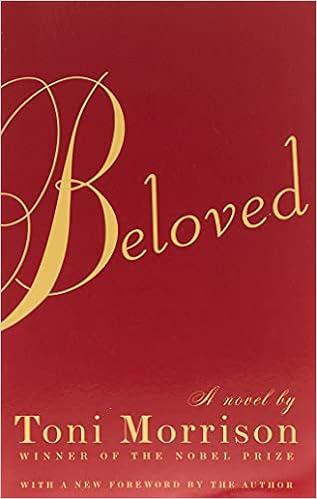
Denver and Sethe have found a rhythm in their isolated existence.. Even while they are haunted by an occasional eerie noise or movement from the unexpected, and even as they mourn the loss of Baby Suggs, their mother/grandmother, they have figured out a way to work and live and get through the days. It is only the arrival of Paul D who stirs up old trauma for Sethe, throwing her back into her past, forcing her to relive old horrors. And it is very unclear if their unusual little family will be able to leave the past behind and move forward.
Toni Morrison’s Pulitzer prize-winning Beloved, is beautiful, poetic, lofty, erratic, layered, and extremely hard to understand without guidance. It is likely that repeated readings are necessary to glean the most meaning from the text Because it was not set up as a traditional story might be, it was hard to get oriented to the characters, — who they were, where they were, and how they were related to each other. Once I did muddle through the first, maybe 10%, of the book, however, I was then able to appreciate the book for all its magnificent power.
There is a story here, but a non-linear one and one that mixes in much superstition, supernatural, and memory. In truth, it is a lyrical platform in which to lament the horrors of enslavement, the way in which enslavement robs us of our humanity. It is loosely based on a true story of a woman who, rather than allow her daughter to be captured and be enslaved, murdered her instead. This unthinkable act forces us to examine just how desperate a mother could be to choose death over a life of ownership by another individual. To choose death rather than not having freedom to choose whom one may love and form attachment to. To choose death over a life of being chained, both figuratively and literally.
Most powerful for me were the sparks of memories of Paul D and of Sethe as they went about their day to day on “Sweet Home,” the plantation where they’d originally met. Paul D harks back to a memory of overhearing an assessment of his monetary worth, as if one could place such a figure on a life. At another moment, Sethe remembers overhearing Schoolteacher showing his pupils how to list Sethe’s human qualities on one side of a page and her animal qualities on the other, reducing her to only partly human. There is physical brutality described as well, but I believe these more insidious crimes reveal more about how these individuals were perceived and how these perceptions seeped into their souls– even more so than the physical harm that befell them.
I feel that I’ve gotten so much from having read this book. If reading can impart some degree of empathy, Sethe’s story is an important place to start.




 kindread spirits